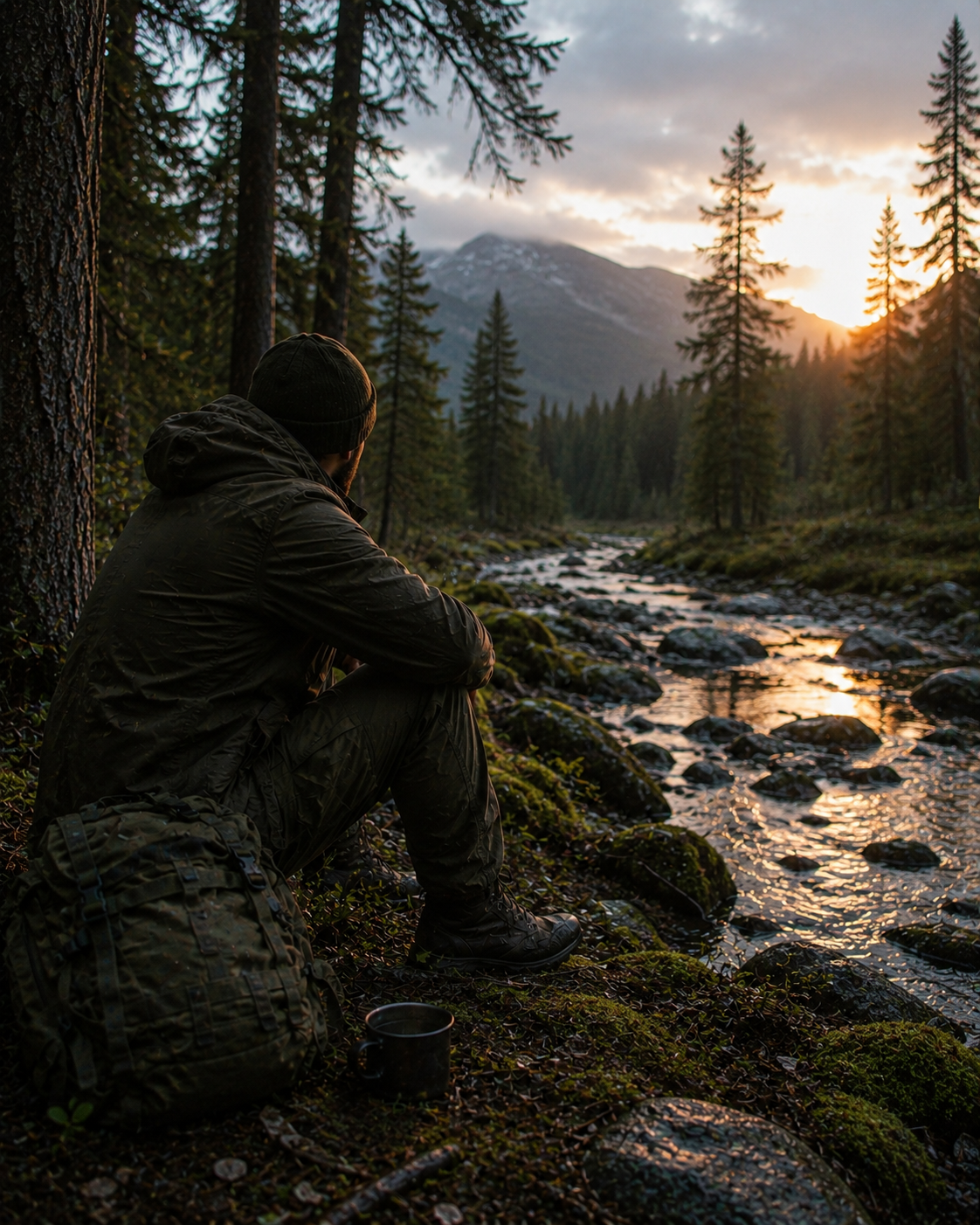
Movement feels like progress.
When you’re lost, tired, or unsure, the instinct is to keep going. To push forward, hoping that the next hill, the next river, the next stretch of forest will change everything.
Sometimes it does.
But often, it doesn’t.
And every step costs you.
So the real skill in survival is not just movement — it’s timing.
Knowing when to stop is just as important as knowing when to go.
If you’re injured, low on energy, or losing daylight, movement becomes risk. You’re more likely to make mistakes, miss signs, or push yourself into a worse situation. That’s when staying put becomes strength, not weakness.
Staying gives you control.
You can build better shelter. Maintain fire. Signal for help. Conserve energy. Stabilize your condition instead of gambling with it.
But staying too long has its own cost.
If there’s no water, no resources, no chance of being found — waiting becomes slow failure. In that case, movement is necessary.
So you ask the right question:
Does moving improve my situation… or just change it?
If movement gives you access to water, higher visibility, or a clearer path — it’s worth it. If it only gives you uncertainty, it’s a risk.
Time matters too.
Moving at the wrong time is dangerous. Darkness reduces visibility. Fatigue reduces judgment. Bad weather hides threats. The same path can be safe in the morning and dangerous by evening.
And direction matters more than speed.
Slow, controlled movement with awareness is better than fast movement driven by urgency. You’re not escaping — you’re navigating.
The hardest part is trust.
Trusting yourself to stop when everything inside you says “keep going.” Trusting yourself to move when fear says “stay.”
Because survival is not about constant action.
It’s about choosing the right action… at the right moment.