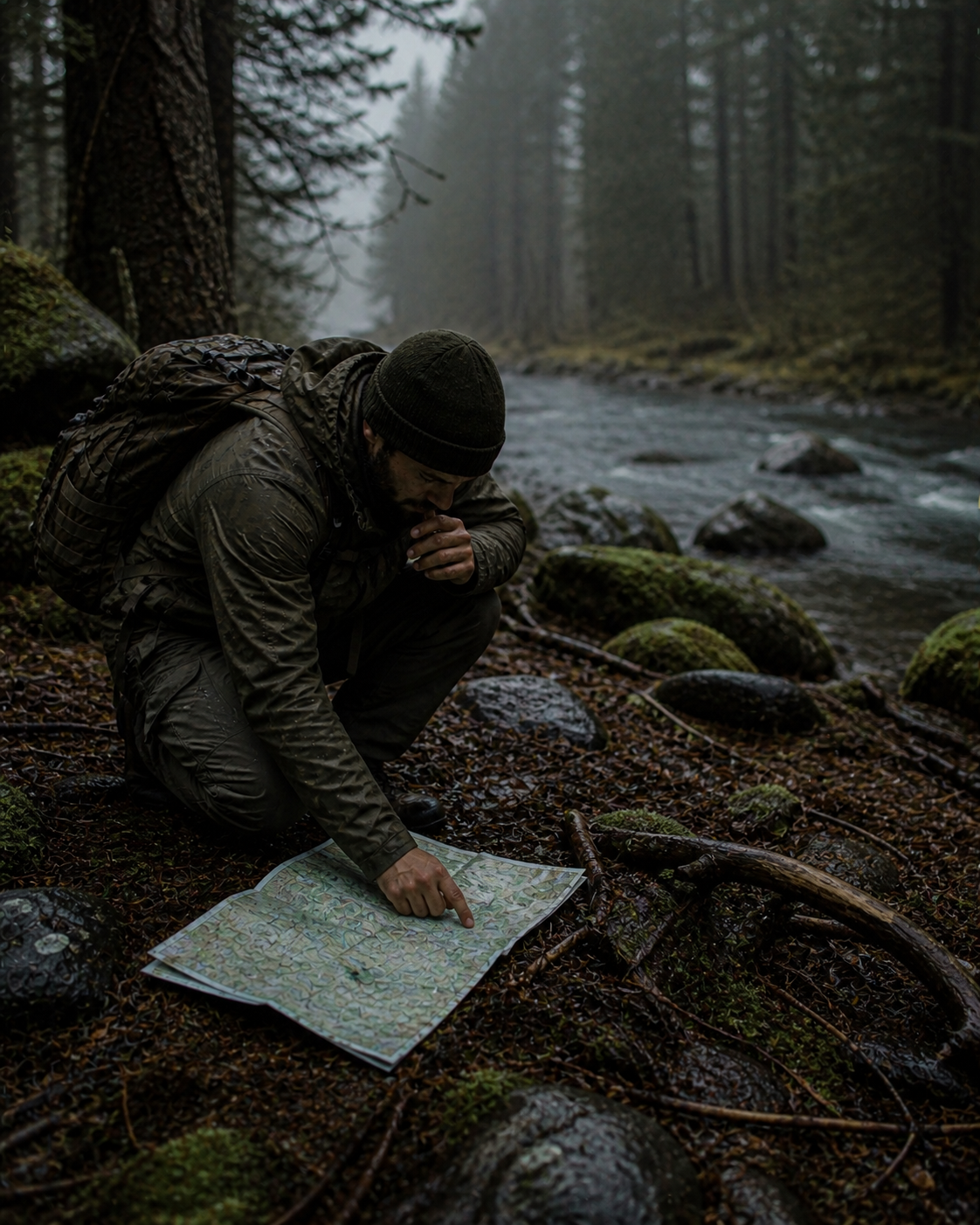
In the wild, you will never have the full picture.
You won’t know exactly where you are. You won’t know how far help is. You won’t know if the path you choose leads to safety or deeper into danger.
Waiting for certainty is a mistake.
Because in survival, certainty almost never comes.
So you learn to decide anyway.
Most people freeze when they don’t have enough information. They delay. They hesitate. They hope that somehow the situation will become clearer on its own.
It won’t.
Time keeps moving, whether you decide or not. And doing nothing is still a decision — just usually the worst one.
So instead of waiting for perfect answers, you look for the least risky option.
Not the best. Not the fastest.
The safest.
Which direction has water? Which path uses less energy? Which choice keeps you closer to shelter, not further from it? You reduce risk step by step.
Then you commit.
Half-decisions are dangerous. Moving without confidence leads to hesitation, and hesitation leads to mistakes. Once you choose, you follow through — while staying aware enough to adjust if something clearly goes wrong.
And you always keep an exit.
Before making a move, think: if this fails, can I go back? Can I recover? Good decisions in survival are not just about moving forward — they’re about not trapping yourself.
Your environment will not give you clear answers.
But it will give you clues.
Patterns. Small signs. Changes in terrain, sound, movement. You collect these pieces and build a direction from them.
It won’t feel certain.
It will feel uncomfortable.
That’s normal.