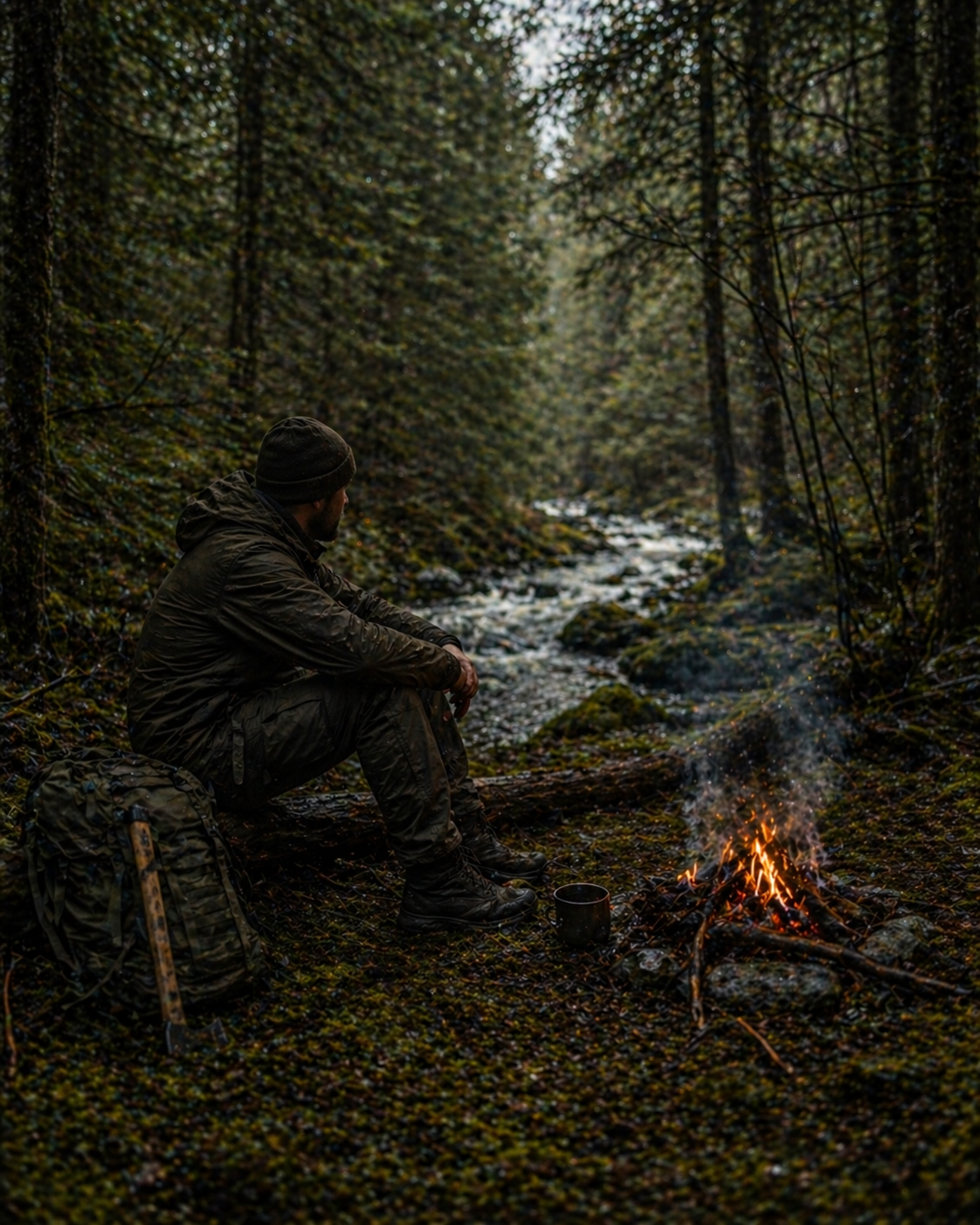

Most people are afraid of silence.
In the wild, silence feels unnatural. Too still. Too empty. Your mind starts filling it with imagined danger. But silence is not your enemy.
It’s information.
The forest is never truly quiet. There are always background sounds — wind through leaves, insects, distant birds, movement in the undergrowth. This is the normal state.
So when that sound disappears, something has changed.
Animals react to presence long before you notice it. When a predator moves through an area, smaller animals go quiet. Birds stop calling. Movement pauses. The forest holds its breath.
If you learn to notice that shift, you gain awareness most people never have.
Stop walking sometimes.
Just stand still and listen. Not for a few seconds — for a full minute or more. At first, you’ll hear nothing special. Then patterns begin to form. Layers of sound separate. You start understanding what “normal” actually is.
And once you know normal, you can detect what doesn’t belong.
Silence can also hide you.
If you move constantly, you become noise. Predictable. Easy to track. But if you stop, slow down, match the rhythm of the environment — you disappear into it. Not physically, but perceptually.
This matters for hunting, for avoiding animals, and even for conserving energy.
Sound travels further than you think.
A snapped branch, heavy footsteps, gear clanking — all of it carries. In quiet conditions, you can be heard long before you’re seen. Controlled movement is not just stealth — it’s survival awareness.
And then there’s another layer.
Your own noise.
Breathing. Movement. Even your thoughts feel louder in silence. If you can control that — slow your breath, reduce unnecessary movement — you start operating differently. More focused. More precise.