The first night is always the hardest.
Not because of the cold. Not because of animals. But because your mind finally has time to speak — and it rarely says anything useful.
When darkness falls, everything changes. Distances disappear. Sounds become sharper. Every crack in the forest feels like a threat. And if you’re not ready for it, fear takes control.
So you don’t fight the night. You prepare for it.
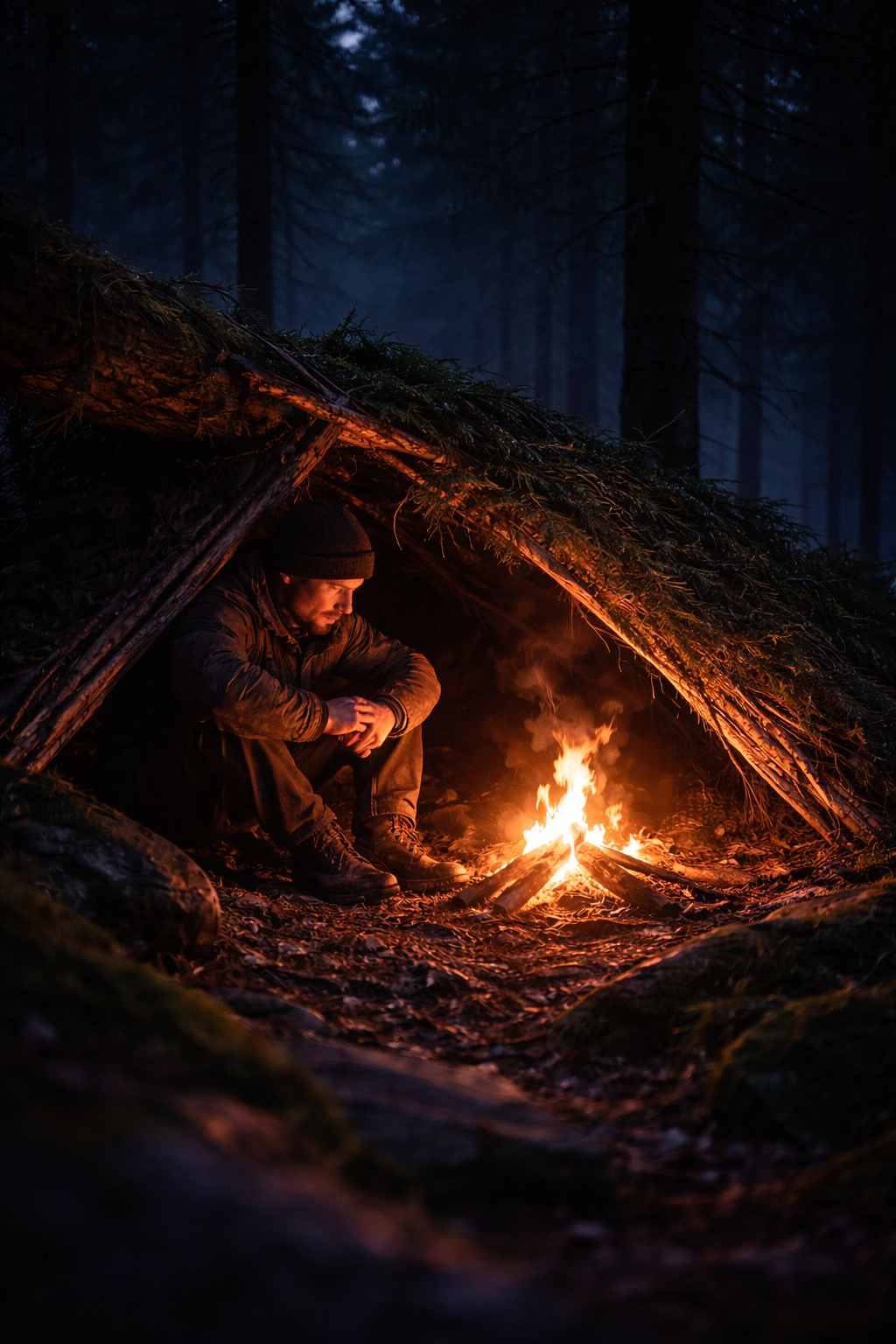
Your goal before sunset is simple: remove as many unknowns as possible. Build your shelter. Gather more firewood than you think you need — then double it. Darkness turns small tasks into dangerous ones, and you don’t want to be searching for sticks when you can’t see your own hands.
Fire becomes more than heat at night. It becomes psychological protection. Light pushes back the unknown. The sound of crackling wood gives your brain something steady to focus on. Keep it alive, even if it’s small.
Position matters. Don’t sleep in low ground where cold air settles. Don’t stay too exposed either. You want balance — protection without isolation.
Now comes the part most people underestimate: your thoughts.
Your mind will try to create problems that aren’t real. It will imagine footsteps, eyes in the dark, danger where there is none. This is normal. Humans are not designed for silence and darkness without context.
You counter this with structure.
Give yourself simple rules: feed the fire, check surroundings, rest. Repeat. When your brain has a task, it has less space for fear.
Sleep will not come easy. Accept that. You don’t need perfect rest — you need enough recovery to function tomorrow. Even short moments of sleep matter.
And remember this: the wild at night is not hunting you.
It is simply existing without caring that you are there.