Hunger in the wild doesn’t feel like hunger at first. It starts as distraction. Your thoughts slow down. Your decisions become weaker. And that’s where danger begins — not from starvation, but from bad choices.
Because in survival, eating the wrong thing is worse than eating nothing.
Forget the idea of “just find berries” or “eat plants.” The wild is not a grocery store. It’s a test of discipline. The rule is simple: if you’re not sure — don’t eat it.
Start with what you know is safe.
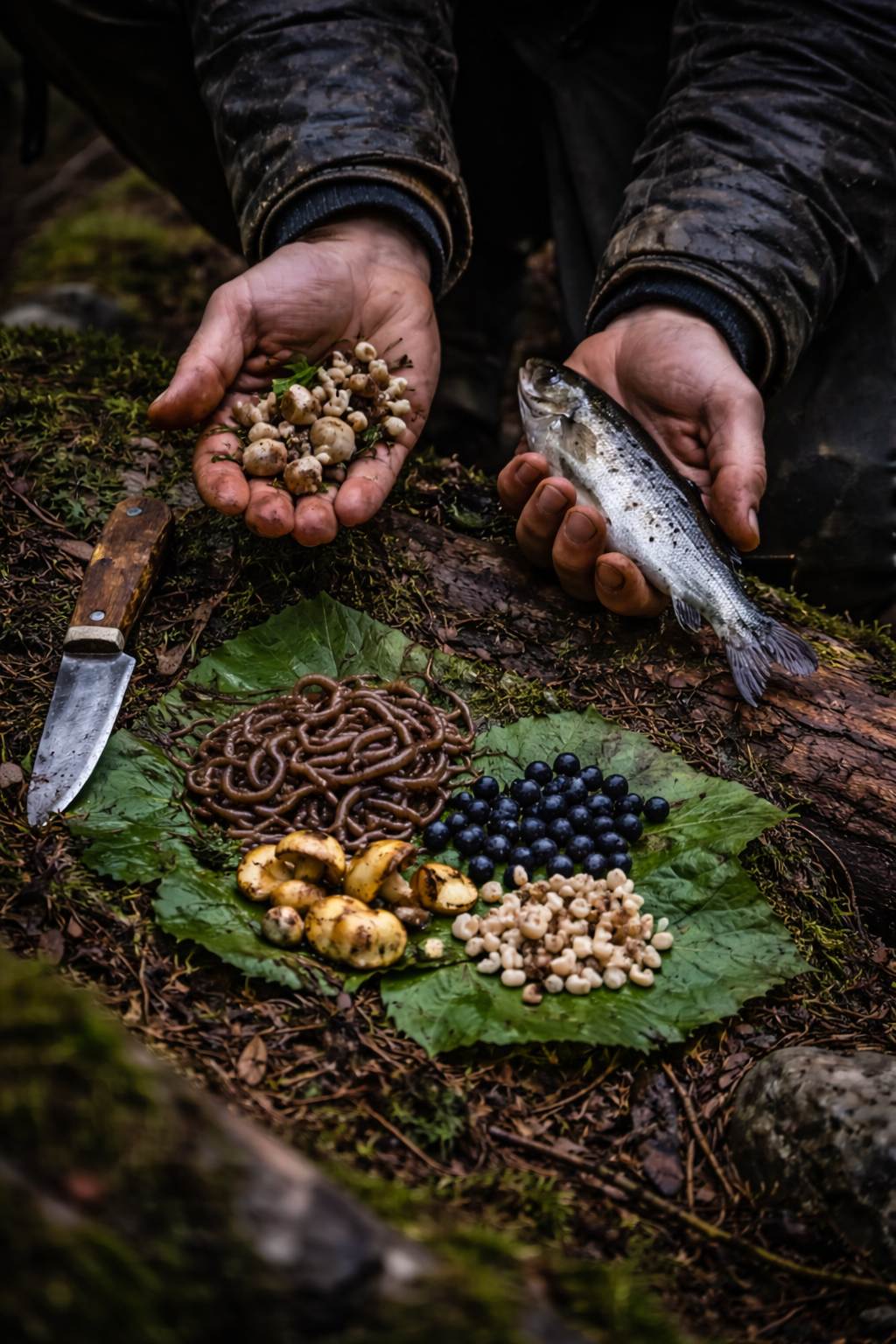
Insects are one of the most reliable food sources. They’re everywhere, high in protein, and require no tracking skills. Avoid bright-colored ones, hairy bodies, or anything that smells strongly. But ants, beetles, larvae — they can keep you alive when nothing else will.
Fish are better than land animals if you have the chance. They require less energy to catch compared to hunting. Even a simple sharpened stick can work in shallow water if you’re patient.
Plants are the most dangerous category for beginners. Many look harmless. Some are deadly. If you absolutely must test a plant, do it slowly: touch it to your skin, wait. Then lips, wait. Then a small taste, wait. Survival is not about speed — it’s about avoiding fatal mistakes.
Focus on calorie vs effort.
Chasing animals burns more energy than it gives back unless you succeed. That’s why traps are smarter than chasing. Simple snares can work while you rest. In survival, efficiency is everything.
Look for signs of life. Birds, insects, animal tracks — they all point toward food and water sources. Where life gathers, resources exist.
And one more truth people don’t like: you will feel uncomfortable.
You may eat things you never imagined. You may go hours or days with very little. That’s normal. Survival is not about comfort — it’s about staying functional long enough to get out.