The first thing that happens when people realize they are lost is not physical danger — it’s mental collapse. Panic arrives quietly. It doesn’t scream. It whispers: you’re done. And if you believe it, you start making bad decisions fast.
Stop moving for a moment.
Most survival situations get worse not because of the environment, but because of unnecessary movement. Every step without direction burns energy, water, and hope. Your first task is not escape — it is control.
Look around carefully. You are not trying to find “help.” You are trying to understand your position. Rivers, sun direction, mountain lines, broken branches, animal paths — everything is information. The wild is not empty. It is speaking all the time, just not in words.
If you have a phone, do not waste battery trying random calls. Check signal in high ground or open areas. If no signal exists, conserve it. A dead phone is just weight.
Now comes the most important decision: stay or move.
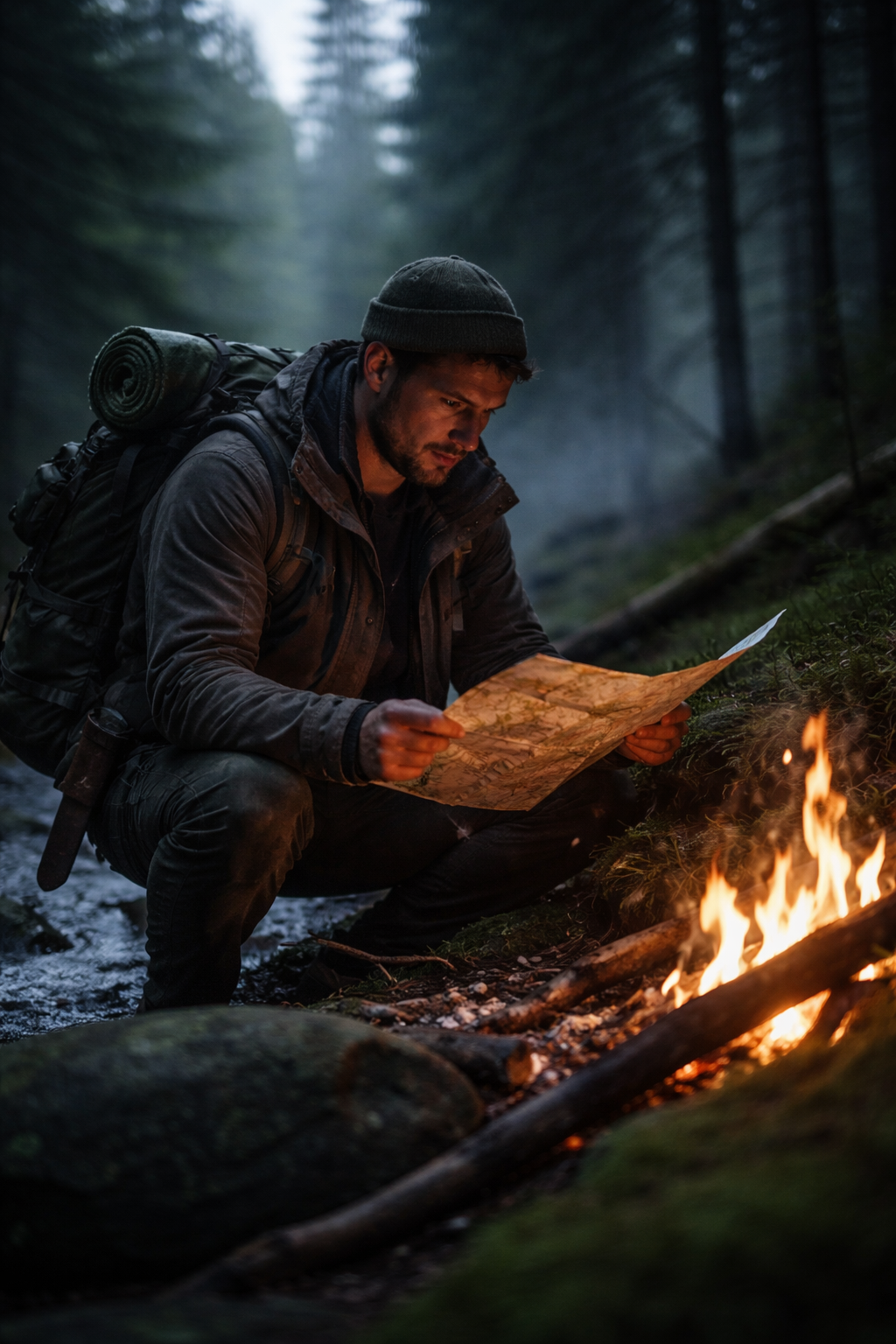
If you are injured, low on water, or it’s close to night — stay. Build a visible location. Fire is your voice. Smoke is your signal. Three repeated structures (three fires, three piles of rocks, three marks) signal distress in almost every rescue system in the world.
If you must move, do it with purpose. Follow water downhill. It leads to life, paths, and often civilization. Never wander randomly “hoping” for something.
Night will test you more than hunger or cold. That’s when fear becomes loud. People don’t die in the wild at night because of predators — they die because they lose mental structure. You need one: fire, shelter, and a plan for morning. That’s enough.
And remember this: being lost is temporary. But the decisions you make while lost can become permanent.