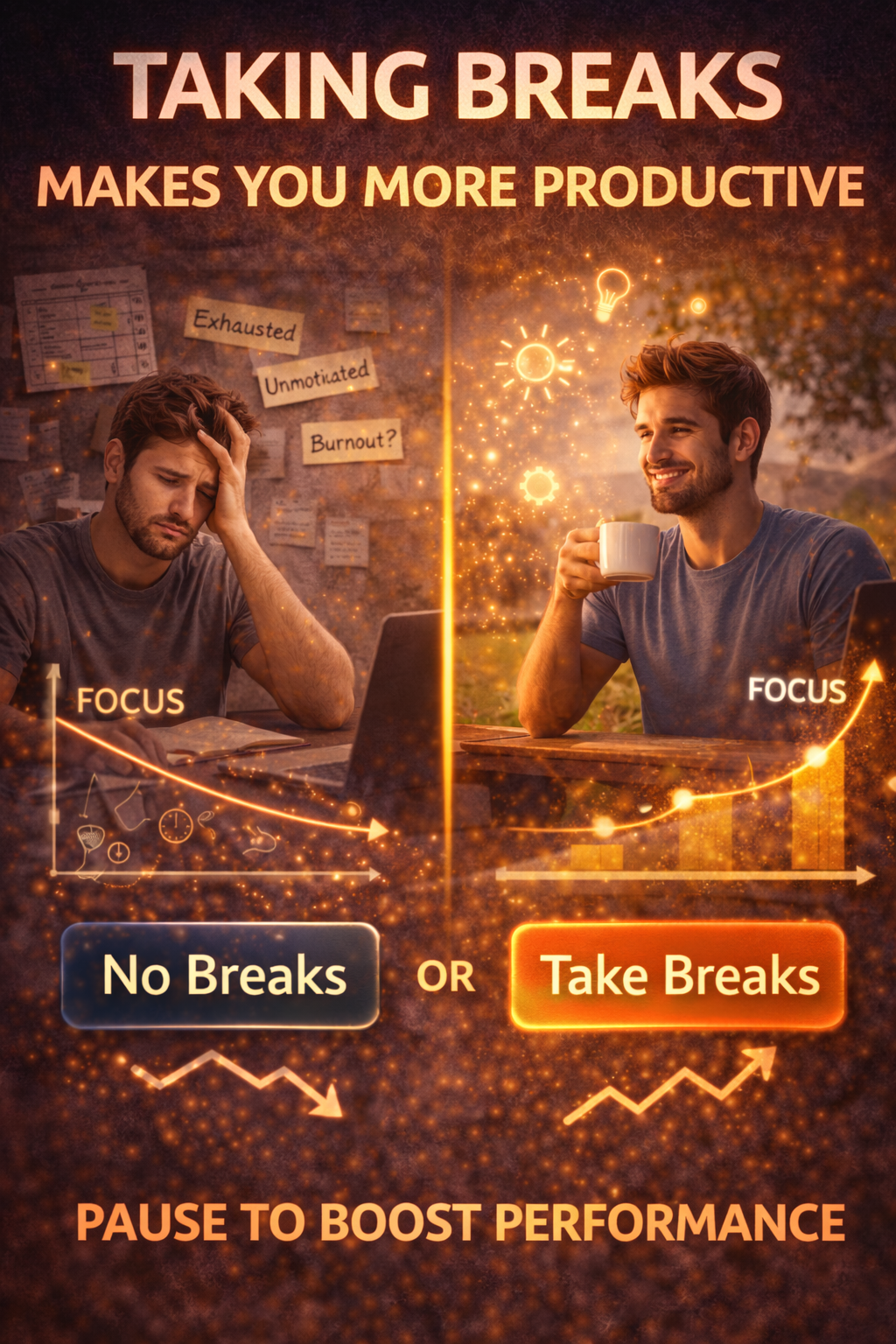

Many people believe that working non-stop leads to better results.
They try to push through fatigue.
They skip breaks.
They work for long hours without rest.
But in reality, this approach often leads to the opposite — lower productivity and faster burnout.
The Brain Needs Recovery
Your brain is not designed to stay focused endlessly.
After a period of deep work, your focus naturally decreases. You become slower, make more mistakes, and lose clarity.
Without breaks:
- concentration drops
- creativity decreases
- mental fatigue increases
Taking breaks allows your mind to recover and reset.
Quality Over Constant Work
Working longer does not always mean working better.
After a certain point, your efficiency declines. You may spend more time on tasks but achieve less.
Short breaks can:
- restore focus
- improve performance
- help you return with a fresh perspective
Sometimes stepping away helps you solve problems faster.
Preventing Burnout
Continuous work without rest leads to burnout.
You may feel:
- exhausted
- unmotivated
- mentally drained
Regular breaks help maintain balance and protect your energy over time.
Boosting Creativity
Some of the best ideas come when you are not actively working.
Walking, resting, or simply changing your environment allows your brain to process information differently.
This often leads to new insights and solutions.
Simple Ways to Take Effective Breaks
Breaks don’t need to be long.
You can:
- step away from your workspace
- take a short walk
- stretch or relax
- avoid screens for a few minutes
Even a small pause can make a big difference.
Final Thoughts
Taking breaks is not a waste of time.
It is part of working effectively.
When you give your mind time to rest, you come back stronger, more focused, and more productive.