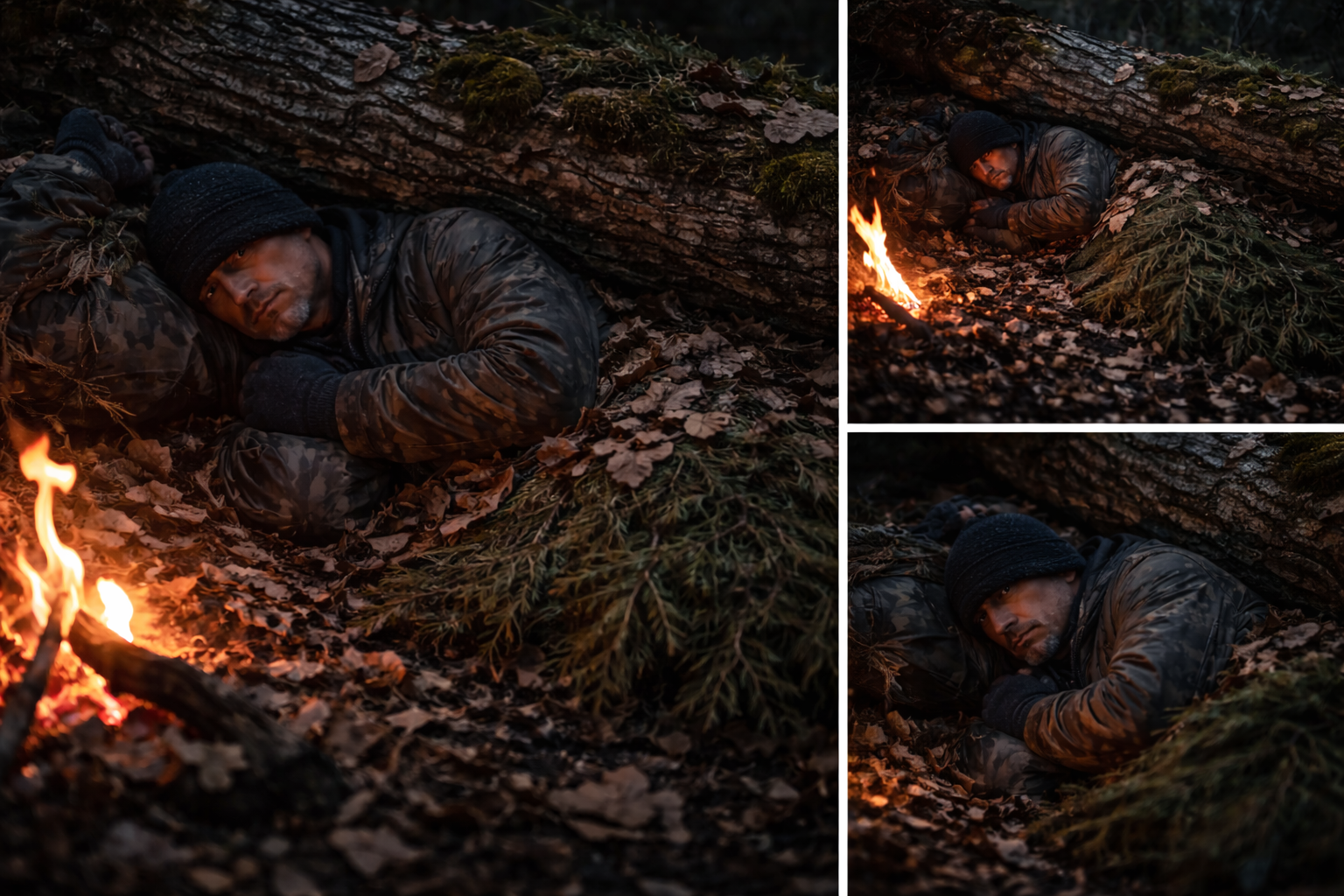

When people imagine sleeping in the wilderness, they often think the biggest danger is animals or cold air.
But experienced survivalists know the real enemy during the night is the ground itself.
The earth constantly pulls heat away from your body. Even when the air temperature feels tolerable, the ground can slowly drain your body heat for hours.
And by morning, that heat loss can leave you exhausted, weak, and dangerously cold.
🌡️ The Hidden Danger of Ground Heat Loss
Your body naturally produces heat while you sleep.
But when you lie directly on soil, rocks, or damp forest floor, that heat is pulled away through conduction.
This is why people can become dangerously cold even when the air temperature isn’t freezing.
In survival situations, insulation from the ground is often more important than a blanket.
Why a Fallen Log Can Save Energy
One simple trick experienced outdoorsmen use is sleeping next to or slightly against a large fallen log.
Logs act like natural barriers:
- They block cold wind at ground level
- They hold a small amount of warmth from the day
- They create a protected micro-space behind them
When combined with leaves, moss, or pine branches underneath your body, this setup dramatically reduces heat loss.
🌲 The Simple Survival Bed
A quick survival sleeping setup often looks like this:
1️⃣ A thick layer of leaves or branches on the ground
2️⃣ Your body positioned beside a log or rock
3️⃣ Extra insulation piled over your legs or torso
This basic structure can make the difference between restful sleep and a miserable, energy-draining night.