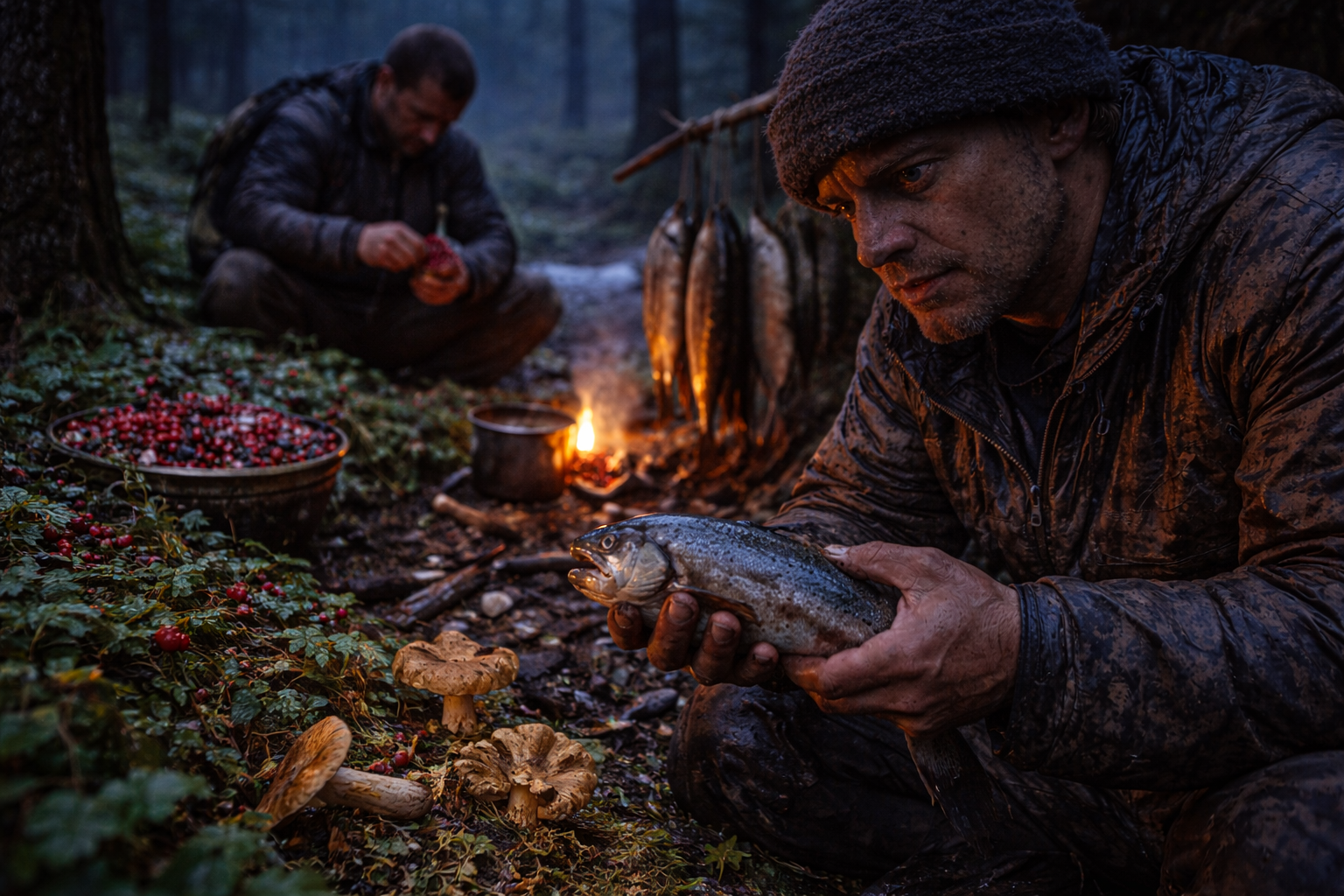

At first glance, it feels like luck.
A river full of fish. A forest packed with berries. Game trails everywhere.
Your brain relaxes — we’re safe now.
That moment is where many survival stories turn fatal.
Early humans learned a hard truth: abundance creates dangerous decisions.
When resources appear unlimited, people stop thinking long-term. They build poor shelters because “we won’t be here long.” They burn calories chasing food they don’t need yet. They stay in flood zones because water feels reassuring. They ignore weather signs because comfort dulls awareness.
Nature uses abundance as a test.
Rivers flood without warning. Berry zones attract predators. Rich areas draw insects, disease, and competition. What looks like safety often hides instability — shifting terrain, seasonal collapse, or human pressure.
Experienced survivors do the opposite of instinct:
- They limit harvesting, even when food is everywhere
- They move uphill, away from water, not closer
- They build shelters as if scarcity is coming — because it always does
Primitive survival wasn’t about grabbing everything.
It was about restraint, timing, and reading what abundance attracts next.