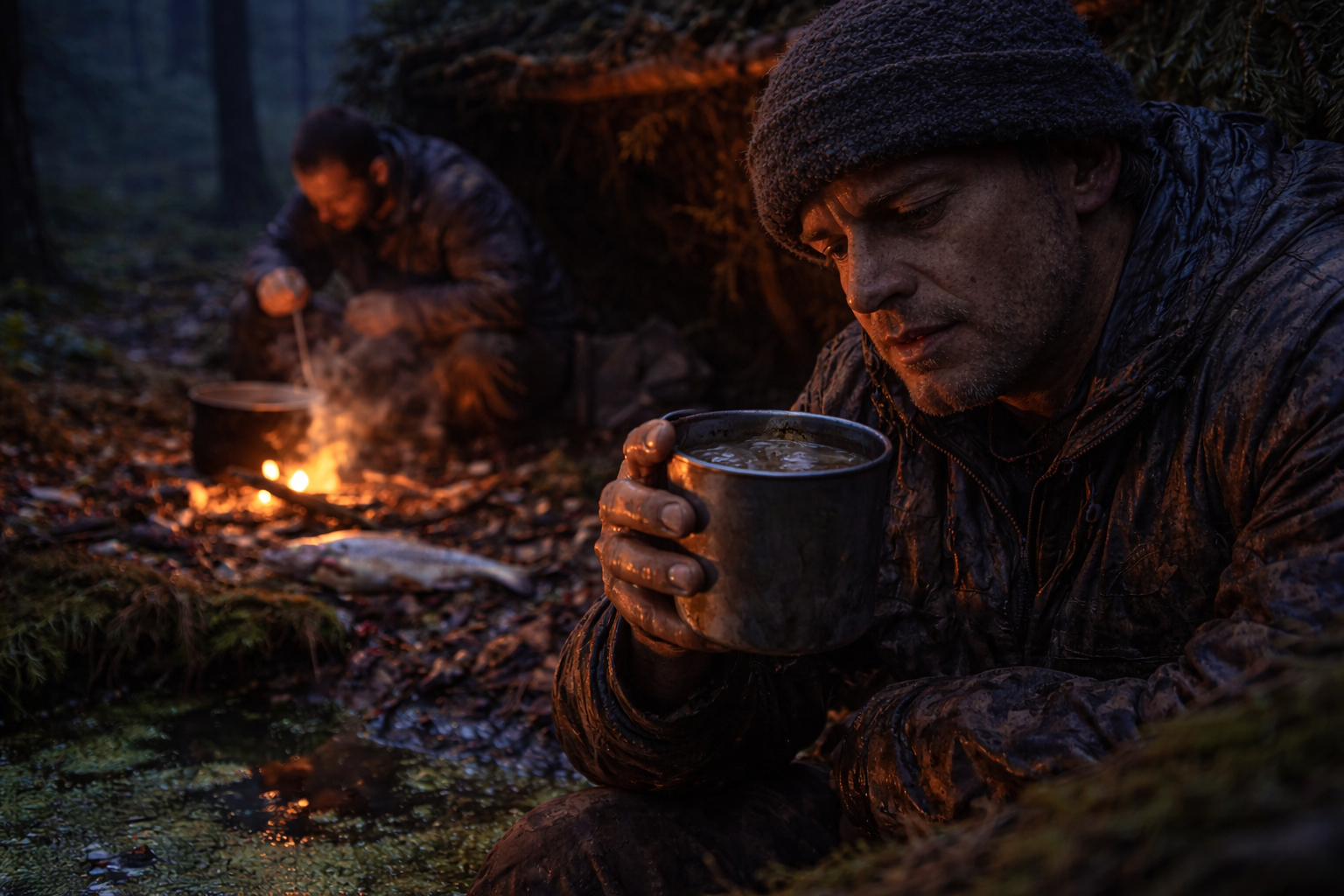

In survival stories, danger is loud — storms, predators, cold.
But some of the deadliest threats arrive quietly, wrapped in comfort.
A warm camp.
Clear-looking water.
Easy food.
A spot that feels right.
This is where survivors stop dying fast — and start dying slowly.
Comfort Is Not the Same as Safety
The human brain evolved to seek comfort as a survival signal. Warmth, food, and rest tell your nervous system: “Threat reduced.”
In nature, that signal is often wrong.
Many real survival failures begin with a sentence survivors never question:
“This place feels safe.”
Feeling safe shuts down vigilance. You stop noticing smells, animal signs, weather shifts, andch5 behavior. You sleep deeper. You delay decisions. You ignore small warnings.
Nature doesn’t attack comfort directly.
It lets it rot you from the inside.
The Slow Killers Hidden in ‘Good’ Resources
Stagnant Water
Clear pools can carry parasites that don’t hit immediately. Symptoms appear days later — when strength, hydration, and morale collapse together.
Easy Calories
Over-reliance on berries, shellfish, or small game can cause protein deficiency, poisoning, or digestive failure. The body feels “fed” while actually weakening.
Sheltered Low Ground
Warm valleys trap cold air at night, flood without warning, and funnel animals directly through camp.
Fire Comfort
Big, cozy fires attract insects, predators, and humans — while draining fuel and exposing position.
Why Survivors Ignore the Warning Signs
Because nothing hurts yet.
Poisoned comfort works by delay. By the time the body reacts, options are gone.
The survivor isn’t killed by one mistake — but by staying too long.
Early humans survived by treating comfort with suspicion. They rotated camps. They avoided perfect-looking spots. They moved before conditions forced them to.
The Rule That Separates Survivors From Victims
If a resource feels too easy, ask what it’s costing you long-term.
Comfort should be temporary.
Movement, awareness, and adaptability keep you alive.
In survival, the land rarely kills you immediately.
It waits until you stop questioning it.