In survival, the most dangerous resources are the ones that make you stop thinking.
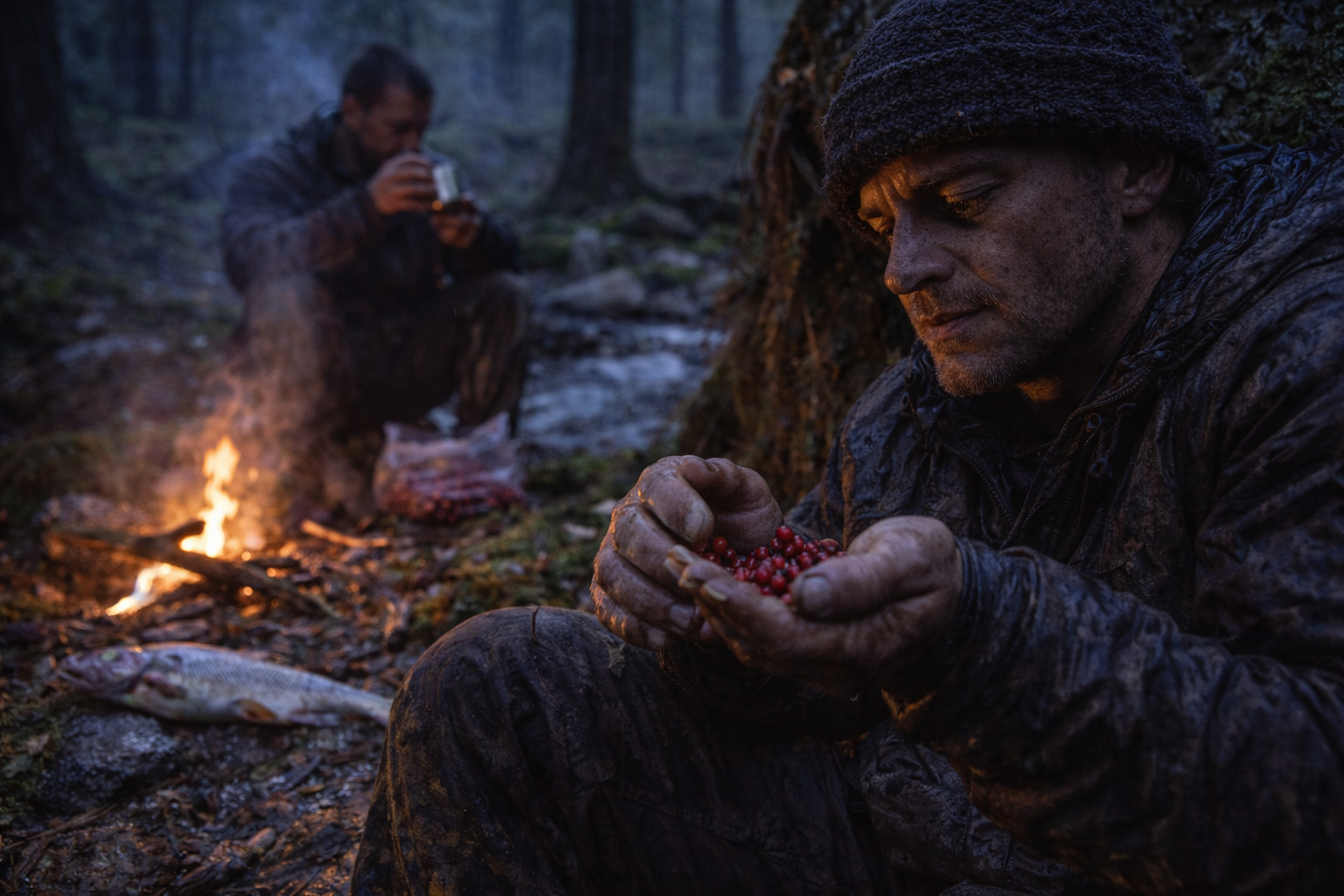
When people find water, berries, or easy calories early, something subtle happens: movement slows, decisions narrow, and the mind shifts from survival mode to comfort mode. This is where many survival stories quietly turn bad.
Why early resources create false security
Finding food or water triggers relief. Relief lowers urgency. Lower urgency reduces scouting, shelter improvement, and exit planning. Survivors stop asking “Where am I going?” and start asking “How long can I stay?”
Nature doesn’t punish panic first — it punishes complacency.
The danger of staying too long
Temporary resources dry up fast. Small streams disappear. Berry patches attract animals. Easy hunting zones get depleted. When the resource collapses, the survivor is weaker, colder, and often deeper in unfamiliar terrain.
Early humans learned this the hard way: no resource is permanent unless the land supports movement.
How professionals treat early resources
Experienced survivalists follow one rule:
Use early resources to gain strength — not to settle.
Water is for hydration and planning. Food is for energy and travel. Neither is permission to stop.
Signs you’re falling into the resource trap
- You stop exploring beyond immediate sight
- You delay shelter upgrades
- You tell yourself “I’ll move tomorrow” repeatedly
- You feel calmer but less alert
That calm isn’t safety. It’s sedation.
The correct survival mindset
Resources should increase your options, not reduce them.
The moment a resource limits movement or awareness, it becomes a liability.
Survival isn’t about finding things.
It’s about knowing when to leave them behind.