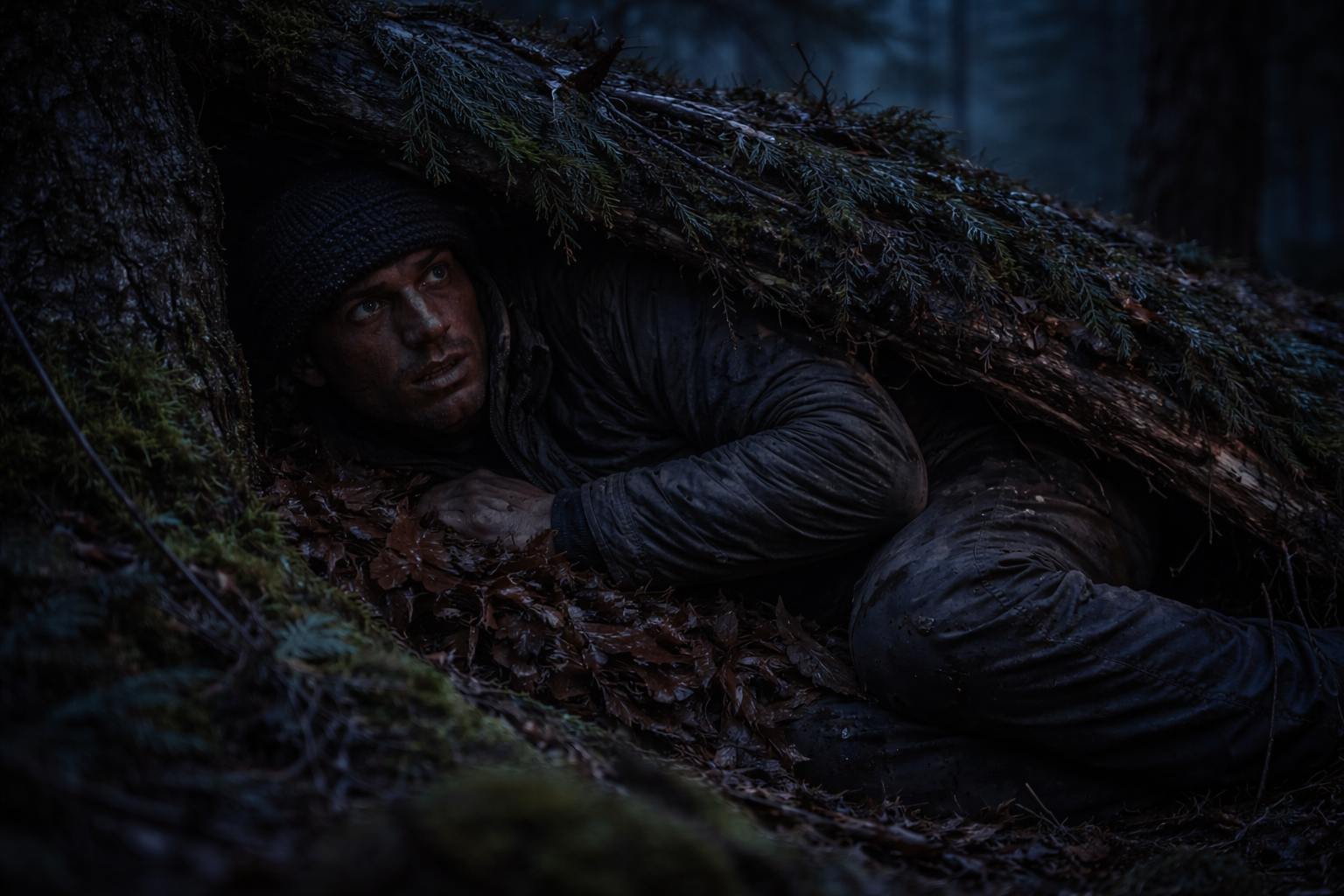

How Humans Survived Constant Rain, Swamps, and Moisture When “Staying Dry” Was Impossible
Most survival advice is built around one fragile idea:
“Stay dry at all costs.”
In many environments, that advice is useless.
Rainforests, coastal zones, swamps, temperate forests, endless storms — humans have survived where dryness simply did not exist. Not by defeating moisture, but by changing how the body interacts with it.
The Dangerous Illusion of Dryness
Trying to stay completely dry in a wet environment often leads to:
- Constant movement
- Overbuilding shelters
- Sweating inside improvised protection
- Rapid energy loss
- Hypothermia caused by evaporation
Water doesn’t kill you.
The wrong strategy does.
Early survivors learned quickly:
If you can’t eliminate moisture, you control its impact.
The Rule That Changed Everything: Wet Outside, Dry Inside
Successful survivors separated the problem into two zones:
- External wetness — accepted
- Internal heat — protected
They didn’t fight rain on the skin.
They protected:
- Core temperature
- Insulation layers
- Sleep system
Skin can be wet.
Your core cannot.
Why Constant Motion Is a Trap
Many people try to “outrun” wetness.
That fails because:
- Movement causes sweat
- Sweat + moisture = accelerated heat loss
- Fatigue increases injury risk
Survivors in wet environments moved less, not more.
They chose:
- Short relocation windows
- Long still periods
- Strategic pauses during heavy rain
Stillness preserves warmth better than activity.
Shelter Mistakes That Kill in Wet Climates
The deadliest shelters are:
- Fully sealed (trapping moisture)
- Built too large
- Too close to water
- Built for comfort instead of airflow
Successful shelters were:
- Small
- Elevated
- Ventilated
- Designed to shed water, not block it
Airflow prevents rot, mold, and heat loss.
Sleeping Wet — And Surviving
People don’t die because they’re wet.
They die because they sleep wrong while wet.
Survivors focused on:
- Insulating from the ground
- Keeping one dry layer for sleep only
- Sleeping curled, not stretched
- Avoiding compression of insulation
Wet clothing during the day.
Preserved insulation at night.
Mental Adaptation: Accepting the Environment
The biggest shift wasn’t technical — it was psychological.
Once survivors accepted:
- Rain is constant
- Dryness is temporary
- Comfort is optional
Stress dropped. Decisions improved.
Energy stopped leaking into frustration.
The Wet Truth
Some of the longest-surviving humans in history lived in environments where:
- Clothing never fully dried
- Fires were unreliable
- Rain fell daily
- Everything smelled like moisture
They survived not by escaping nature —
but by operating inside it correctly.