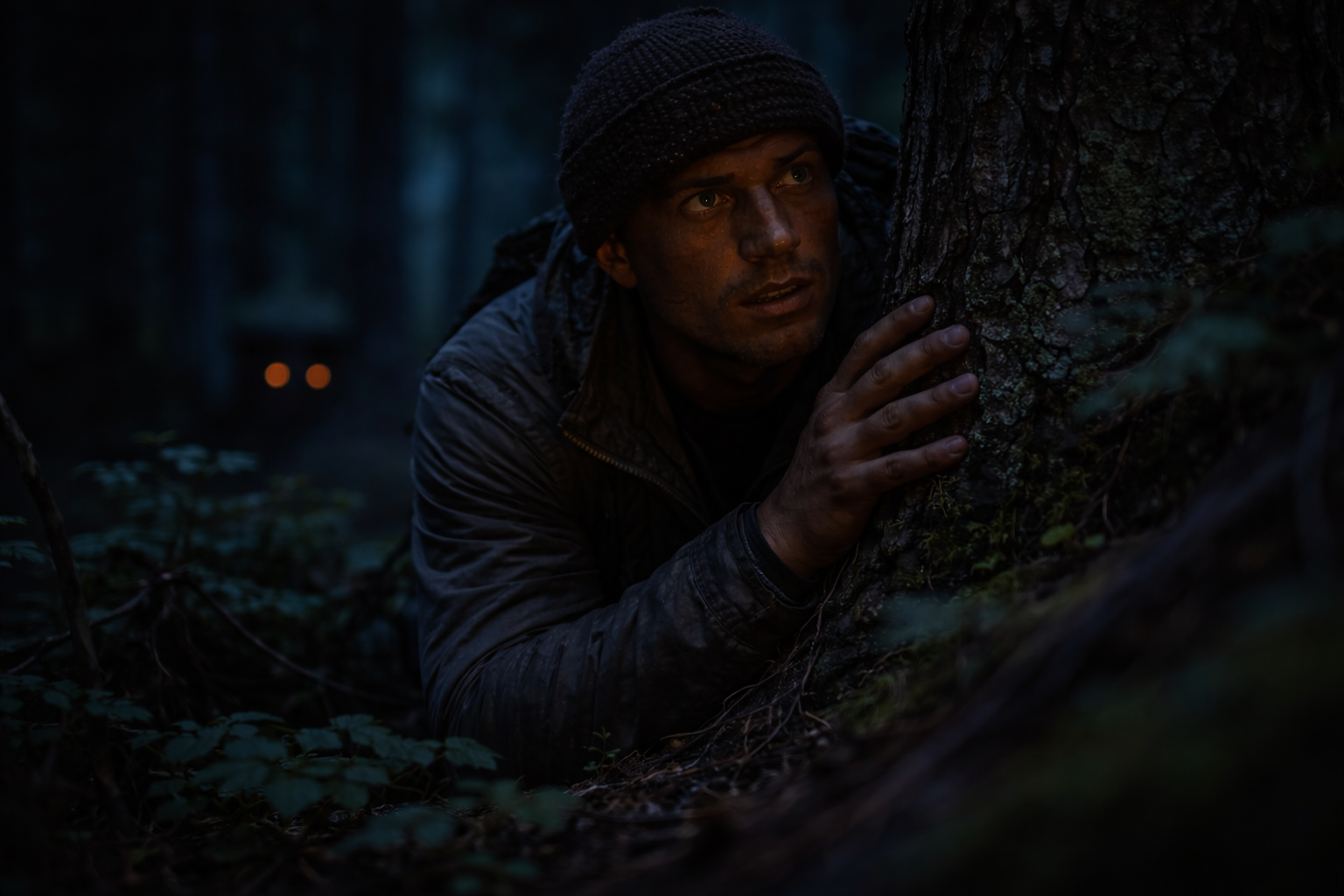
Night changes how the human brain works. Vision weakens, imagination strengthens, and every unfamiliar sound feels intentional. Many people believe the darkness is full of eyes watching them. In reality, most of what you fear at night isn’t hunting you at all.
Understanding the difference between real threats and psychological traps can keep you alive.
The Truth About Predators at Night
Most wild predators avoid humans. Even large animals prefer predictable prey and minimal risk. A standing, upright human with movement and smell is unfamiliar — and often intimidating.
What predators do notice:
-
Unnatural movement (panic running, sudden direction changes)
-
Strong food smells
-
Weak or injured behavior
What they usually ignore:
-
A quiet, still human maintaining awareness
-
Elevated ground positions
-
Areas with human scent trails
Predators don’t stalk humans for sport. They assess risk — and most decide it’s not worth it.
The Real Danger: Other Humans
In survival situations, humans are statistically the most unpredictable threat after dark.
Unlike animals, humans:
-
Move silently with intention
-
Use tools
-
Can follow trails deliberately
-
Are not deterred by fear the same way animals are
This doesn’t mean paranoia — it means smart positioning:
-
Avoid obvious paths and trails at night
-
Never silhouette yourself against fire or sky
-
Listen more than you move
Sounds That Trigger Fear (But Mean Nothing)
Many “threat sounds” are harmless:
-
Branch snaps from temperature changes
-
Small animals moving through leaves
-
Wind shifting canopy weight
-
Your own footsteps echoing differently at night
Your brain fills gaps when vision fails. Darkness amplifies uncertainty — not danger.
When You Are Being Watched
True danger follows patterns:
-
Repeated sounds at consistent distance
-
Movement that stops when you stop
-
Changes in rhythm, not volume
Most random noises are chaotic. Intentional movement is structured.
Survivor Mindset
Early humans survived nights not by fighting darkness — but by reading it correctly.
Stillness beats panic. Awareness beats imagination.
The night isn’t full of monsters — but it punishes those who let fear decide for them.