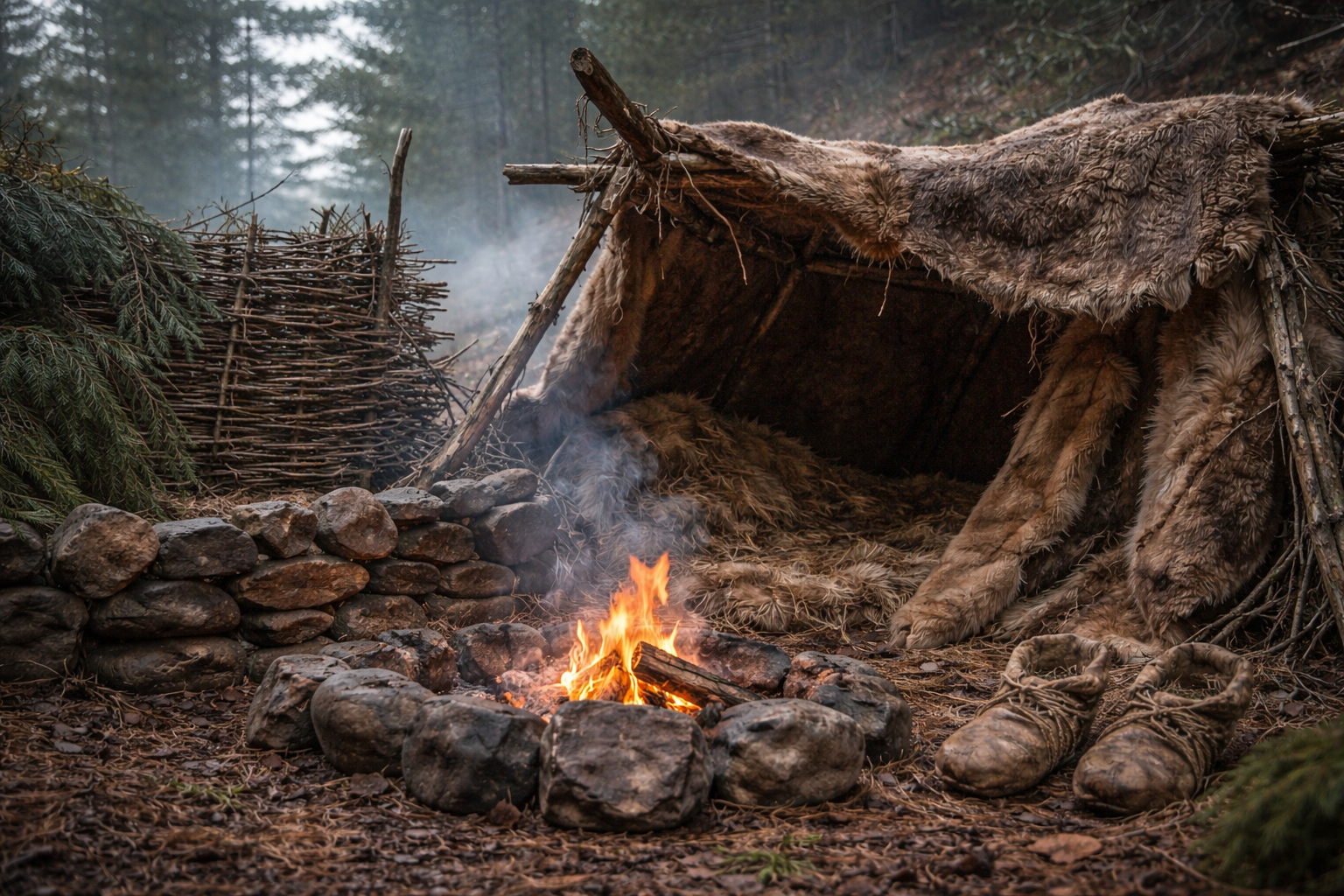

Why Wind Is More Dangerous Than Cold
A calm freezing night can be survivable.
A windy cool night can be deadly.
Wind causes:
-
Accelerated heat loss (wind chill)
-
Rapid dehydration
-
Fire instability or failure
-
Structural collapse of shelters
-
Physical exhaustion
Early humans didn’t fight wind — they redirected, blocked, and hid from it.
The Core Principle of Primitive Wind Protection
Primitive cultures followed three rules:
-
Break the wind
-
Redirect airflow
-
Trap still air
Still air equals warmth. Moving air equals death.
Natural Wind Barriers Used by Early Humans
1. Earth and Terrain — The First Wind Shield
The land itself was the most powerful wind defense.
Used terrain features:
-
Hillsides
-
Rock outcrops
-
Riverbanks
-
Tree lines
-
Natural depressions
Shelters were built below wind level, not on exposed high ground. High ground was for visibility — not survival.
2. Rock Walls and Windbreaks
Stone was used not for insulation, but for wind deflection.
Primitive wind walls:
-
Redirected gusts upward
-
Created calm air pockets
-
Stored heat from fires
Even a waist-high stone wall could reduce wind force by more than half.
3. Brush and Wood Wind Screens
When stone wasn’t available, wood took over.
Materials used:
-
Branches
-
Saplings
-
Deadfall
-
Thickets
Laid densely and angled, these barriers:
-
Broke gusts into weaker currents
-
Reduced wind speed
-
Allowed smoke to escape
This technique is still used in modern bushcraft camps.
Primitive Clothing as Wind Protection
Early clothing wasn’t only about warmth — it was about blocking airflow.
Outer Wind Layers
-
Smooth hides
-
Leather
-
Bark sheets
These materials didn’t insulate much — but they stopped wind from stripping heat away.
Inner Insulation
-
Fur
-
Grass padding
-
Soft fibers
The wind layer protected the insulation. Without it, warmth vanished.
Wind Direction Was Everything
Primitive shelters were never placed randomly.
They were:
-
Angled away from prevailing winds
-
Built with narrow entrances
-
Positioned with fire on the leeward side
Even today, this knowledge can mean the difference between comfort and hypothermia.
Fire and Wind: A Dangerous Relationship
Wind can both kill and save.
Primitive fire strategies included:
-
Fire pits below ground level
-
Stone fire reflectors
-
Wind-blocking walls
A sheltered fire:
-
Burns hotter
-
Uses less fuel
-
Produces consistent heat
An exposed fire wastes energy and invites disaster.
Storm Survival Without Modern Gear
During storms, early humans:
-
Lowered shelter profiles
-
Reinforced roofs with soil or brush
-
Abandoned exposed camps early
-
Used temporary wind shelters for movement
They understood one rule well:
👉 You don’t endure storms — you avoid them.
What Modern Survivalists Can Learn
Primitive wind protection teaches us:
-
Terrain matters more than gear
-
Wind kills faster than cold
-
Low-profile shelters survive storms
-
Blocking airflow is more important than insulation
Modern materials fail. Knowledge doesn’t.