
Why Foot Protection Was a Survival Priority
In wilderness survival, mobility equals life. Early humans learned fast that:
-
Bare feet burn on hot ground and freeze on snow
-
Sharp stone causes infections
-
Wet feet lead to rot, hypothermia, and immobility
Primitive footwear wasn’t about comfort — it was about keeping feet functional long enough to hunt, migrate, and survive harsh climates.
The Core Principle of Primitive Footwear
All ancient footwear followed the same survival logic:
Protect → Insulate → Drain → Dry
Modern boots still follow this formula — just with synthetic materials.
Types of Primitive Footwear Used Around the World
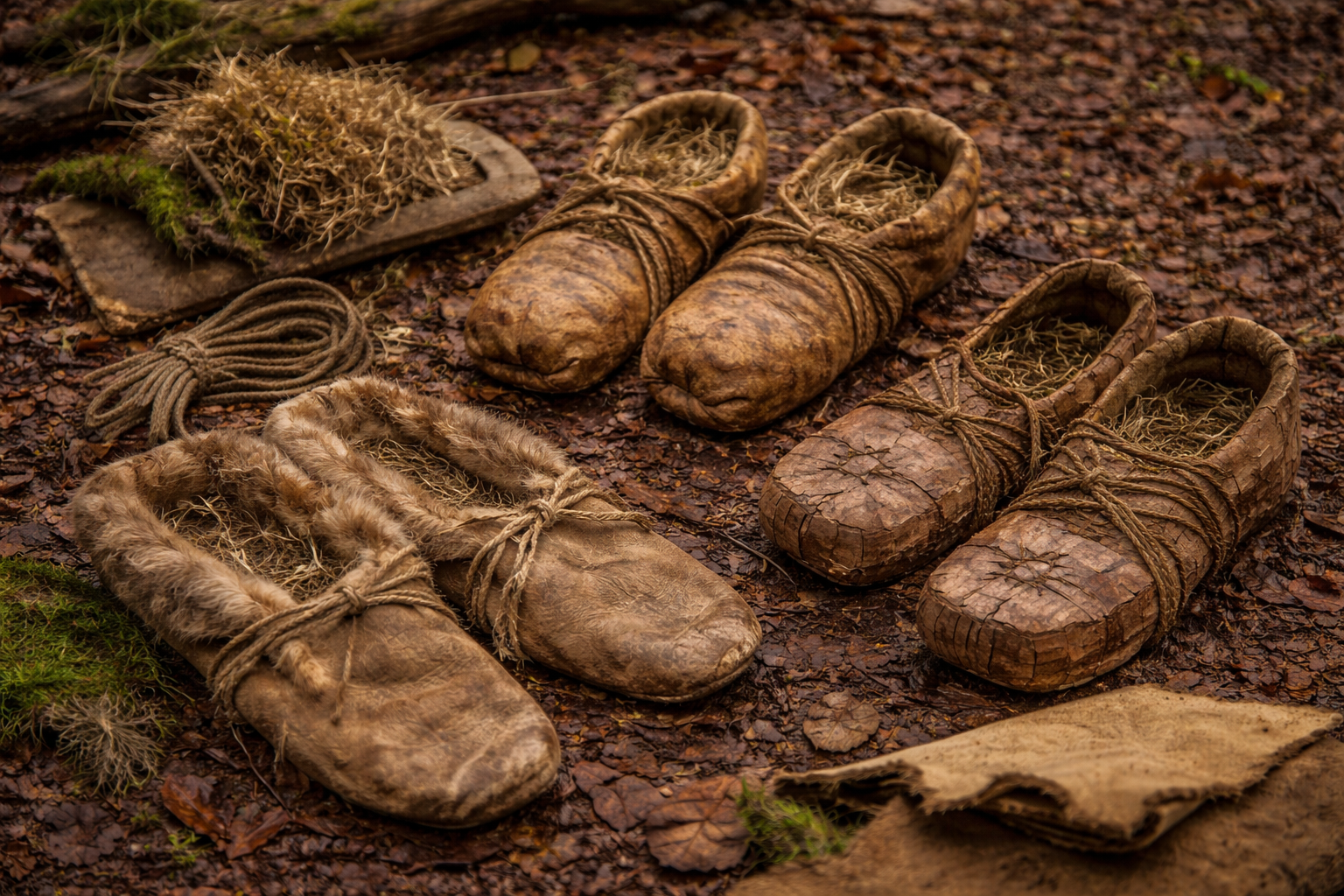
1. Hide-Wrapped Shoes (The Oldest “Boots”)
Probably the most universal solution.
How it worked:
-
Animal hide wrapped around the foot
-
Fur turned inward for insulation
-
Tied with sinew, rawhide, or plant cordage
Why it worked:
-
Excellent cold insulation
-
Breathable compared to sealed boots
-
Easy to repair in the field
This method was used by Ice Age Europeans, Arctic tribes, and early forest cultures.
2. Grass, Moss & Bark Insolation Shoes
In forested regions, people used layers, not thick leather.
Materials used:
-
Dry grass
-
Moss
-
Birch bark
-
Tree fibers
Feet were wrapped in insulation first, then covered with hide or bark.
Survival advantage:
Even when wet, you could replace the insulation quickly — something modern boots can’t do.
3. Rawhide Moccasins
Soft, flexible footwear that allowed quiet movement.
Best for:
-
Forest hunting
-
Long-distance travel
-
Minimal foot fatigue
Moccasins taught a crucial lesson: feeling the ground prevents injury. Primitive people walked carefully, not blindly.
4. Wooden & Bark Soles
In swampy or thorn-heavy terrain, people added rigid soles.
How:
-
Flat wood or bark base
-
Foot wrapped and tied on top
This reduced punctures and allowed walking on sharp terrain — a primitive ancestor of sandals.
How Primitive Footwear Prevented Cold Injuries
Cold kills feet in three ways:
-
Heat loss
-
Moisture
-
Circulation restriction
Primitive footwear avoided tight fits. Loose wrapping allowed:
-
Better blood flow
-
Air insulation
-
Adjustability depending on weather
In extreme cold, people changed insulation multiple times a day instead of relying on one sealed boot.
What Modern Survivalists Can Learn
Primitive footwear teaches powerful lessons:
-
Dry matters more than waterproof
-
Repairability beats durability
-
Adaptability beats comfort
-
Foot awareness prevents injuries
In a real survival scenario, knowing how to wrap and protect feet using natural materials can mean the difference between escape and immobilization.