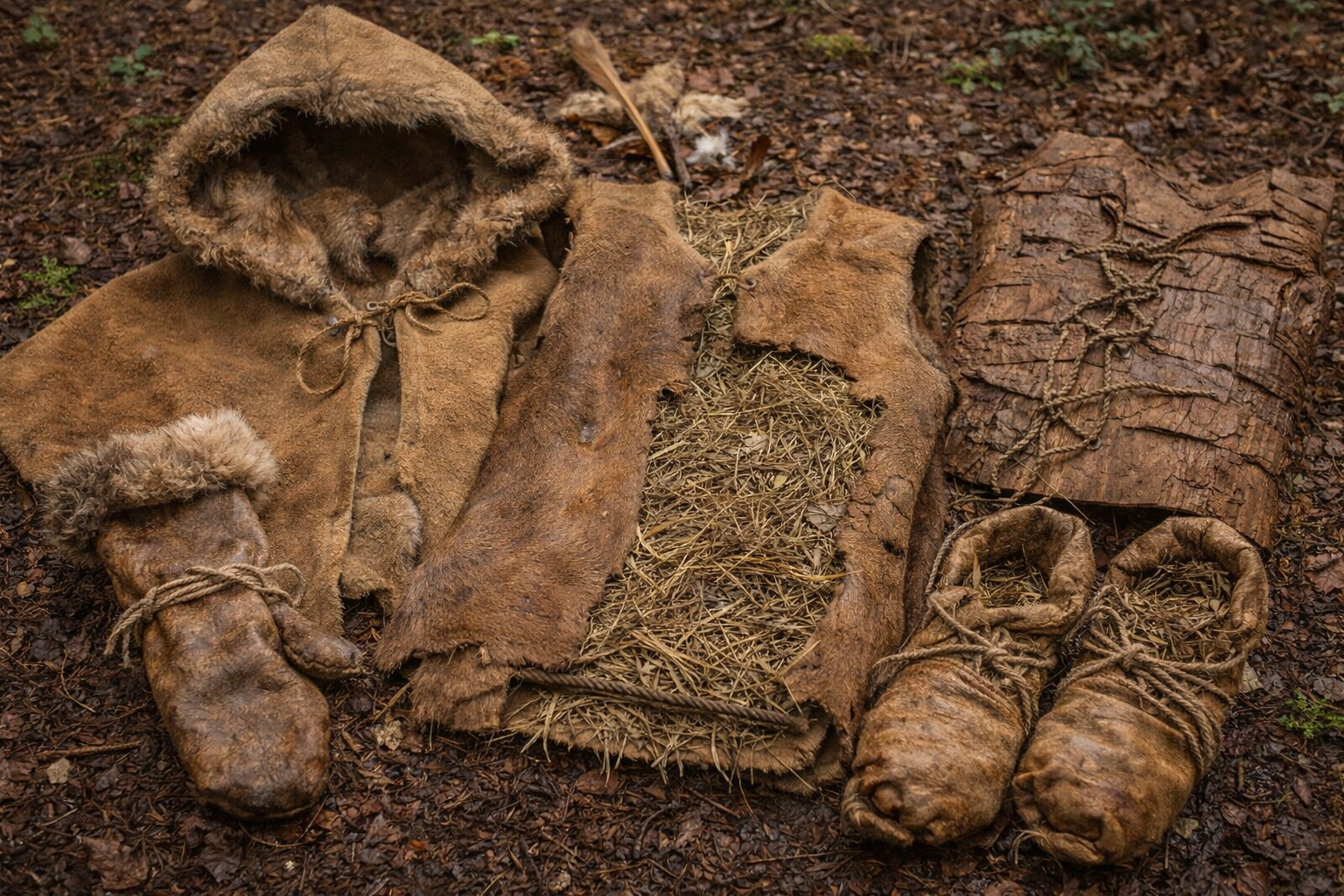

Why Primitive Clothing Matters in Survival
Cold doesn’t kill instantly — it drains energy, focus, and decision-making. Primitive people understood something modern gear users often forget:
👉 Warmth comes from structure, layering, and moisture control — not brand names.
Primitive clothing systems allowed humans to:
-
Survive freezing nights
-
Stay mobile while hunting
-
Sleep without fire
-
Live in wet and windy environments
These principles still work today.
The Three Core Principles of Primitive Warmth
1. Trapped Air Is the Real Insulation
Early humans didn’t chase thickness — they chased air pockets.
Fur, layered hides, and woven fibers trap warm air close to the body. The more trapped air, the warmer the clothing — even if it looks thin.
This is why:
-
Fur facing inward is warmer
-
Loose-fitting garments outperform tight ones
-
Multiple layers beat a single heavy layer
2. Moisture Control Was Survival
Wet clothing equals rapid heat loss.
Primitive cultures used:
-
Outer layers that shed water (leather, bark fiber)
-
Inner layers that stayed dry (fur, grass, plant fiber padding)
-
Constant drying near fire or in wind
They avoided sweating, moved deliberately, and rested often — all to stay dry.
3. The Body Was Fully Covered
Heat loss happens fastest from:
-
Head
-
Neck
-
Hands
-
Feet
Primitive clothing always protected these zones first.
Hoods, wraps, mittens, foot bindings — none were optional. They were non-negotiable survival gear.
Materials Used Before Modern Fabrics
Animal Hides & Fur
-
Deerskin, elk, goat, rabbit
-
Fur worn inward for insulation
-
Leather outward for wind and rain
Tanned hides remain flexible even when wet — a huge advantage.
Plant Fibers
-
Bark (basswood, cedar)
-
Grasses and reeds
-
Nettles and flax
Used for:
-
Cordage
-
Woven cloaks
-
Insulating padding
Often layered under hides for warmth.
Natural Insulators
-
Dry grass
-
Moss
-
Feathers
-
Leaves
Packed between layers or stuffed into footwear.
Primitive Layering System (Still Works Today)
Inner Layer — Insulation
-
Fur
-
Grass padding
-
Soft plant fiber
Middle Layer — Structure
-
Leather
-
Woven fiber
-
Bark cloth
Outer Layer — Weather Protection
-
Oiled hide
-
Bark cloak
-
Fur worn outward in extreme cold
This system adapts easily to changing weather — a key survival advantage.
Primitive Clothing Was Designed for Movement
Early humans couldn’t afford stiff or heavy garments.
Their clothing:
-
Allowed crouching and climbing
-
Could be loosened or tightened
-
Was repairable in the field
-
Used minimal seams
Simple design = reliability.
Lessons for Modern Bushcrafters
You don’t need to abandon modern gear — but understanding primitive clothing teaches you:
-
How to stay warm when gear fails
-
How to improvise insulation
-
How to manage moisture
-
How to survive without stores or supplies
In real survival, knowledge weighs nothing.