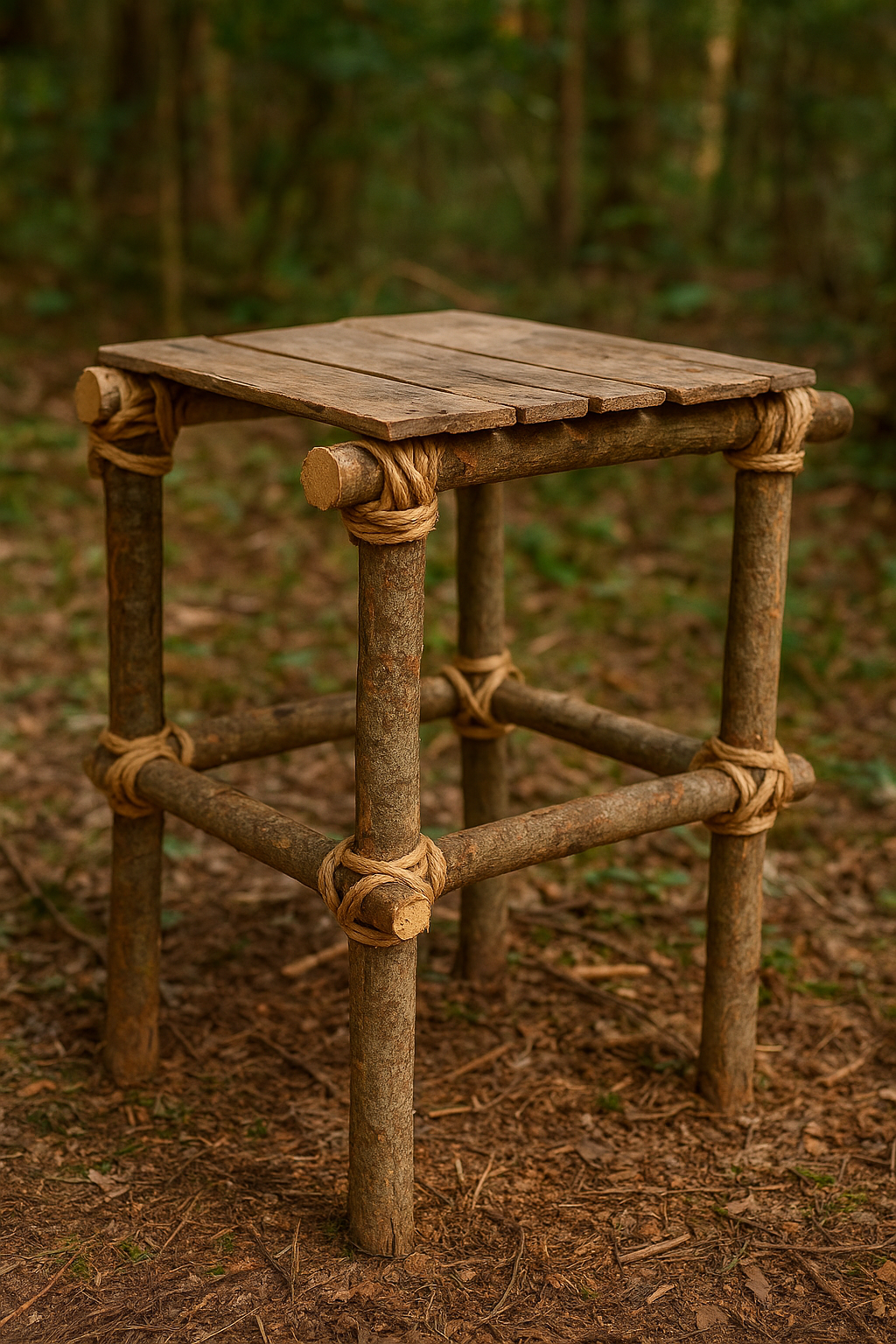

Why Joinery Matters in Bushcraft
In survival and bushcraft scenarios, furniture isn’t decorative — it’s functional:
-
A weak joint means a collapsed bed
-
A bad lashing means a broken chair
-
Poor design wastes energy and materials
Good joinery:
-
Increases strength without extra weight
-
Allows furniture to be repaired easily
-
Works even with green, uneven wood
-
Leaves no trace if dismantled
This is why experienced bushcrafters focus more on connections than on cutting.
Essential Bushcraft Joinery Techniques
1. Notch-Based Joinery
Notches allow wood to lock together naturally.
Common types:
-
Square notch — best for benches and tables
-
V-notch — ideal for angled supports
-
Saddle notch — prevents rolling on round poles
Key principle:
👉 The wood should support itself before you add cordage.
2. Mortise-Style Slots (Primitive Version)
Even without chisels, you can create simple slots using:
-
Knife tip
-
Baton technique
-
Controlled burning (advanced)
Used for:
-
Bed frames
-
Chair legs
-
Vertical racks
This creates furniture that can stand without lashings, making it extremely stable.
Natural Lashings: The Forest’s Fasteners
Lashings are what turn separate pieces into a single structure.
Best Natural Cordage Sources
-
Inner tree bark (basswood, cedar)
-
Spruce roots
-
Willow bark
-
Twisted grasses and plant fibers
The strength comes not from the material alone, but from how it’s wrapped.
Most Useful Bushcraft Lashings
Square Lashing
-
For 90-degree joints
-
Tables, racks, chairs
Diagonal Lashing
-
Prevents racking (side-to-side movement)
-
Essential for furniture that supports body weight
Shear Lashing
-
Allows controlled movement
-
Folding seats or adjustable frames
Tightness matters more than complexity. A simple lashing done correctly beats a fancy knot done poorly.
Tension, Not Strength, Is the Secret
Many beginners think thicker rope equals stronger furniture. That’s wrong.
What actually matters:
-
Even tension
-
Consistent wrapping
-
Locking fraps (tightening turns)
A thin cord under proper tension can hold more weight than a thick cord tied loosely.
Design Tip: Let Gravity Do the Work
The best bushcraft furniture designs:
-
Use body weight to tighten joints
-
Shift load downward, not outward
-
Get stronger the more they’re used
Example:
-
A sleeping platform that presses joints together
-
A chair that locks tighter when you sit down
This is ancient engineering — and it works.
Mistakes to Avoid
-
Over-carving (weakens wood)
-
Relying only on lashings without notches
-
Using dry, brittle cordage
-
Ignoring load direction
Bushcraft furniture fails slowly — unless it’s built wrong. Then it fails all at once.
Why This Skill Matters for Survival
Knowing joinery and lashings means you can build:
-
Beds that keep you off cold ground
-
Tables for food prep
-
Drying racks
-
Tool storage
-
Long-term camp infrastructure
All without modern tools.
This isn’t just bushcraft — it’s primitive engineering.